

Key Takeaways
- Unusual noises are a critical sign that your car needs a checkup and could signal mechanical failures.
- Dashboard lights are designed to alert you to urgent issues that demand quick action.
- Fluid leaks and strange odors are common symptoms of potentially serious vehicle problems.
- Performance changes, from reduced fuel efficiency to steering difficulties, should never be ignored.
Table of Contents
- Unusual Noises
- Dashboard Warning Lights
- Fluid Leaks and Strange Odors
- Changes in Vehicle Performance
- Smoke or Visible Emissions
- Difficulty Starting the Engine
- Unusual Vibrations or Handling Issues
- Conclusion
Keeping a vehicle in good condition requires more than routine maintenance; it also involves recognizing when something isn’t working as it should. Unusual noises, dashboard warning lights, fluid leaks, or changes in how a car handles can all indicate underlying mechanical issues. Ignoring these early warning signs may lead to more serious problems over time, potentially affecting safety, performance, and overall reliability. Understanding the common indicators that a vehicle needs professional attention can help drivers address concerns early and maintain dependable transportation.
Drivers who notice persistent vibrations, difficulty starting, reduced fuel efficiency, or braking issues should consider seeking a professional evaluation. Experienced technicians can diagnose problems accurately and recommend appropriate solutions before minor concerns become costly repairs. Consulting a trusted auto repair shop Issaquah WA, can provide the expertise and tools necessary to assess a vehicle’s condition and restore optimal performance. By responding promptly to warning signs, vehicle owners can protect their investment and ensure their car remains safe and dependable for everyday use.
Unusual Noises
Cars are engineered for quiet and consistent operation. Any new or strange noises coming from your vehicle should be taken seriously. For example, grinding or squealing noises often indicate worn brake pads or problems with the braking system. If you notice knocking or tapping sounds, this could be a sign of engine trouble, possibly due to low oil levels or internal mechanical issues. Clunking or rattling noises typically originate from the suspension or loose parts and should be investigated quickly to prevent further damage.
Dashboard Warning Lights
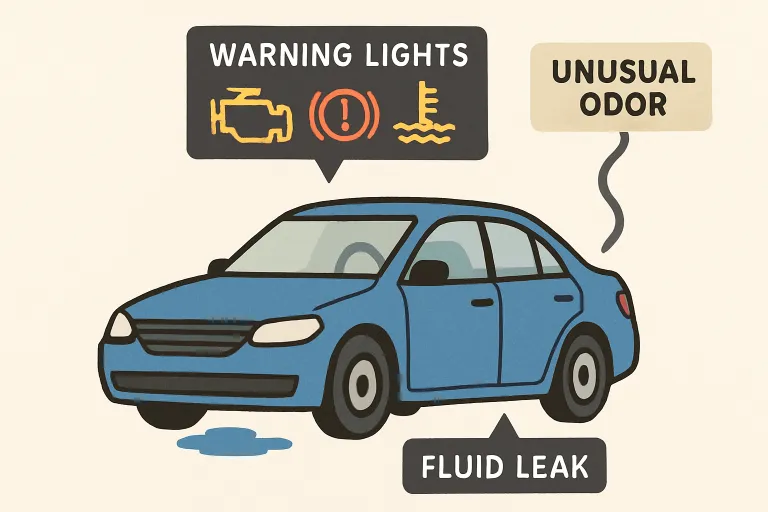
Dashboards are fitted with warning lights to help you catch issues before they become severe. The most common and urgent lights include:
- Check Engine Light: This light can be triggered by a wide range of issues, from something minor like a loose gas cap to more serious engine problems.
- Oil Pressure Warning: Indicates dangerously low oil pressure, which can damage your engine.
- Battery Warning: Suggests a problem with your car’s electrical charging system.
- Brake Warning: Alerts you to potential faults in the brake system that require immediate attention.
Ignoring these lights can leave you stranded or force you to pay for extensive repairs.
Fluid Leaks and Strange Odors
Any noticeable fluid beneath your parked vehicle is a reason for concern. The most frequent leaks involve red or brown fluids (usually transmission or power steering fluids), yellow or green fluids (coolant), and clear or brown fluids (brake fluids). Additionally, odd smells coming from your car, such as the scent of burning rubber, burning oil, or a sweet, syrupy aroma, often mean there’s an active leak or something overheating.
Pay close attention to musty or moldy odors inside your car as well; these can indicate clogged filters or excessive moisture, which not only affect performance but can also impact your health.
Changes in Vehicle Performance
If your car feels sluggish, responds more slowly, or shows a drop in fuel efficiency, it’s often a red flag. These changes might be related to failing components like spark plugs, oxygen sensors, or filters. Delays in acceleration or difficulty maintaining speed are also warning signs you should not ignore.
Smoke or Visible Emissions
Smoke coming from under the hood or out of the exhaust pipe is almost always a sign of a serious problem:
- White Smoke: Often signals coolant leaking into your engine, suggesting a blown head gasket or a cracked cylinder.
- Blue Smoke: Indicates oil is burning, which can happen when piston rings or valve seals are worn.
- Black Smoke: Indicates too much fuel is being burned, typically due to a faulty injector or a dirty air filter.
Smoke issues should be addressed immediately, as continued driving can do irreparable engine damage. More on what smoke colors mean can be found on Kelley Blue Book.
Difficulty Starting the Engine
Struggling to start your car is often due to battery problems, a failing starter motor, or fuel system troubles such as clogged injectors. Modern engines should start quickly and consistently, so if this basic function falters, get a thorough diagnostic at a trusted service center as soon as possible.
Unusual Vibrations or Handling Issues
Experiencing vibrations through the steering wheel or feeling the car pull in one direction typically suggests a problem with your wheel alignment or suspension. Brake issues can also cause shaking, especially when braking. Ignoring these symptoms can lead to greater tire wear or, worse, safety hazards on the road.
Conclusion
Staying vigilant about your car’s behavior helps you catch warning signs before small issues turn into major ones. Make it a habit to monitor noise, lighting, smells, and any changes in overall performance. Quick response and regular professional maintenance are the best ways to keep your vehicle reliable and extend its useful life.