
The Mumbai Indians have built their legacy on superstar power, unmatched consistency, and a winning culture that transformed them into one of the most successful franchises in IPL history. From Rohit Sharma’s calm leadership to Kieron Pollard’s finishing brilliance and Jasprit Bumrah’s bowling mastery, the franchise has always relied on elite match-winners. But as the team enters a transition phase, one name is increasingly standing out as the face of the future — Tilak Varma.
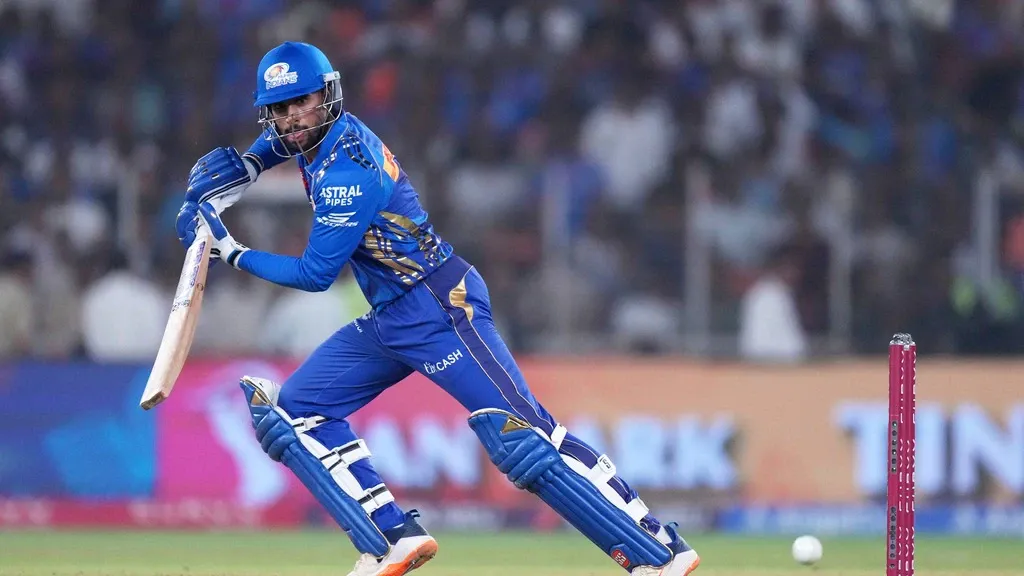
His unbeaten 75 off just 33 balls against Punjab Kings was not merely another explosive IPL innings. It was a statement. In a season where Mumbai Indians have often looked vulnerable and inconsistent, Tilak once again showed why he could become the franchise’s next long-term batting pillar.
A Match-Winning Knock Under Pressure
Mumbai Indians’ victory over Punjab Kings in Dharamsala came under unusual circumstances. Regular captain Hardik Pandya and senior batter Suryakumar Yadav were absent, while Jasprit Bumrah led the side for the first time. The pressure was immense, especially while chasing a challenging target of 201. Yet Tilak Varma played with remarkable maturity, composure, and aggression beyond his age.
What made the knock special was not just the number of runs, but the timing and control with which he constructed the innings. Tilak accelerated precisely when Mumbai needed momentum. He attacked experienced bowlers, handled pressure situations effortlessly, and finished the chase with authority. His innings included six boundaries and six sixes, highlighting both power and range.
For Mumbai Indians, this innings symbolized something larger than two points on the table. The franchise has been struggling to redefine itself after years of dominance built around senior stalwarts. Rohit Sharma remains an iconic figure, but age and evolving team dynamics mean Mumbai must prepare for the next generation of leaders. Tilak Varma appears perfectly positioned for that responsibility.
The Perfect Modern T20 Batter
The 23-year-old left-hander has consistently shown qualities that separate good players from franchise-defining stars. He is calm under pressure, adaptable across batting positions, and fearless against both pace and spin. More importantly, he understands the demands of modern T20 cricket. Unlike many young players who rely solely on power-hitting, Tilak blends game awareness with controlled aggression.
His growth since joining Mumbai Indians in 2022 has been remarkable. Initially viewed as a talented youngster, he gradually developed into a dependable middle-order batter capable of rescuing innings and finishing matches. Over the last few seasons, he has become one of Mumbai’s most reliable performers, especially in difficult situations.
Another major factor behind Tilak’s importance is his versatility. He can anchor an innings if early wickets fall, but he can also shift gears instantly during death overs. Against Punjab Kings, he displayed both abilities. Mumbai lost momentum briefly during the chase, yet Tilak ensured the required run rate never spiraled out of control. His ability to manipulate gaps, rotate strike, and clear boundaries makes him a complete T20 batter.
Temperament Beyond His Years
What also stands out is his temperament. The IPL is one of the most pressurized tournaments in world cricket, and Mumbai Indians arguably carry more scrutiny than any other franchise. Yet Tilak rarely looks overwhelmed. Whether batting alongside senior stars or carrying the innings himself, he appears composed and tactically aware.
That maturity is why many experts now believe Mumbai Indians should build their future batting core around him. With players like Rohit Sharma entering the latter phase of their careers and leadership questions continuing around the franchise, Tilak offers stability for the long term.
His rise also mirrors Mumbai Indians’ historical approach to talent development. The franchise has always identified young Indian cricketers early and transformed them into international stars. Jasprit Bumrah, Hardik Pandya, Krunal Pandya, and Suryakumar Yadav all benefited from Mumbai’s system. Tilak Varma now appears to be the latest success story from that pipeline.
Growing Influence in Indian Cricket
International cricket has already recognized his potential. Tilak has represented India in T20 internationals and has impressed with his fearless batting and consistency. His performances in white-ball cricket underline his ability to succeed beyond franchise tournaments.
The emotional side of his growth was also visible after the Punjab Kings match. Reports highlighted how Tilak flashed the “45” gesture as a tribute to Rohit Sharma, a moment that quickly went viral among fans. It reflected the bond between the current generation and the legends who shaped Mumbai Indians’ identity.
Can Tilak Varma Become Mumbai’s Next Big Leader?
However, the road ahead will not be easy. Expectations around Tilak are now enormous. Opponents will analyze his game more closely, pressure situations will intensify, and comparisons with Mumbai’s past legends will continue. Maintaining consistency over multiple seasons is the true challenge for any young cricketer.
Yet Tilak Varma appears equipped to handle that responsibility. He possesses technical skill, emotional balance, adaptability, and the hunger to improve. Most importantly, he already looks like a player who enjoys responsibility instead of avoiding it.
For Mumbai Indians, that matters immensely. Great franchises survive because they evolve before decline becomes permanent. As senior icons gradually step aside, teams need players capable of carrying the culture forward. Tilak Varma’s latest masterclass against Punjab Kings may eventually be remembered as more than a match-winning innings. It could be seen as the moment Mumbai Indians fully realized who their future belongs to.
TrendioPR TrendioPR TrendioPR TrendioPR TrendioPR TrendioPR TrendioPR TrendioPR TrendioPR TrendioPR TrendioPR TrendioPR TrendioPR TrendioPR TrendioPR TrendioPR TrendioPR TrendioPR TrendioPR TrendioPR TrendioPR TrendioPR TrendioPR TrendioPR TrendioPR TrendioPR TrendioPR TrendioPR TrendioPR TrendioPR TrendioPR TrendioPR TrendioPR TrendioPR TrendioPR TrendioPR TrendioPR TrendioPR TrendioPR TrendioPR TrendioPR TrendioPR TrendioPR TrendioPR TrendioPR TrendioPR TrendioPR TrendioPR TrendioPR TrendioPR TrendioPR TrendioPR TrendioPR TrendioPR TrendioPR TrendioPR TrendioPR TrendioPR TrendioPR TrendioPR TrendioPR TrendioPR TrendioPR TrendioPR TrendioPR TrendioPR TrendioPR TrendioPR TrendioPR TrendioPR TrendioPR TrendioPR TrendioPR TrendioPR TrendioPR TrendioPR TrendioPR TrendioPR TrendioPR TrendioPR TrendioPR TrendioPR TrendioPR TrendioPR TrendioPR TrendioPR TrendioPR TrendioPR TrendioPR TrendioPR TrendioPR TrendioPR TrendioPR TrendioPR TrendioPR TrendioPR TrendioPR TrendioPR TrendioPR TrendioPR TrendioPR TrendioPR TrendioPR TrendioPR TrendioPR TrendioPR TrendioPR TrendioPR TrendioPR TrendioPR TrendioPR TrendioPR TrendioPR TrendioPR TrendioPR TrendioPR TrendioPR TrendioPR TrendioPR TrendioPR TrendioPR TrendioPR TrendioPR TrendioPR TrendioPR TrendioPR TrendioPR TrendioPR TrendioPR TrendioPR TrendioPR TrendioPR TrendioPR TrendioPR TrendioPR TrendioPR TrendioPR TrendioPR TrendioPR TrendioPR TrendioPR TrendioPR TrendioPR TrendioPR TrendioPR TrendioPR TrendioPR TrendioPR TrendioPR TrendioPR TrendioPR TrendioPR TrendioPR TrendioPR TrendioPR TrendioPR TrendioPR TrendioPR TrendioPR TrendioPR TrendioPR TrendioPR TrendioPR TrendioPR TrendioPR TrendioPR TrendioPR